


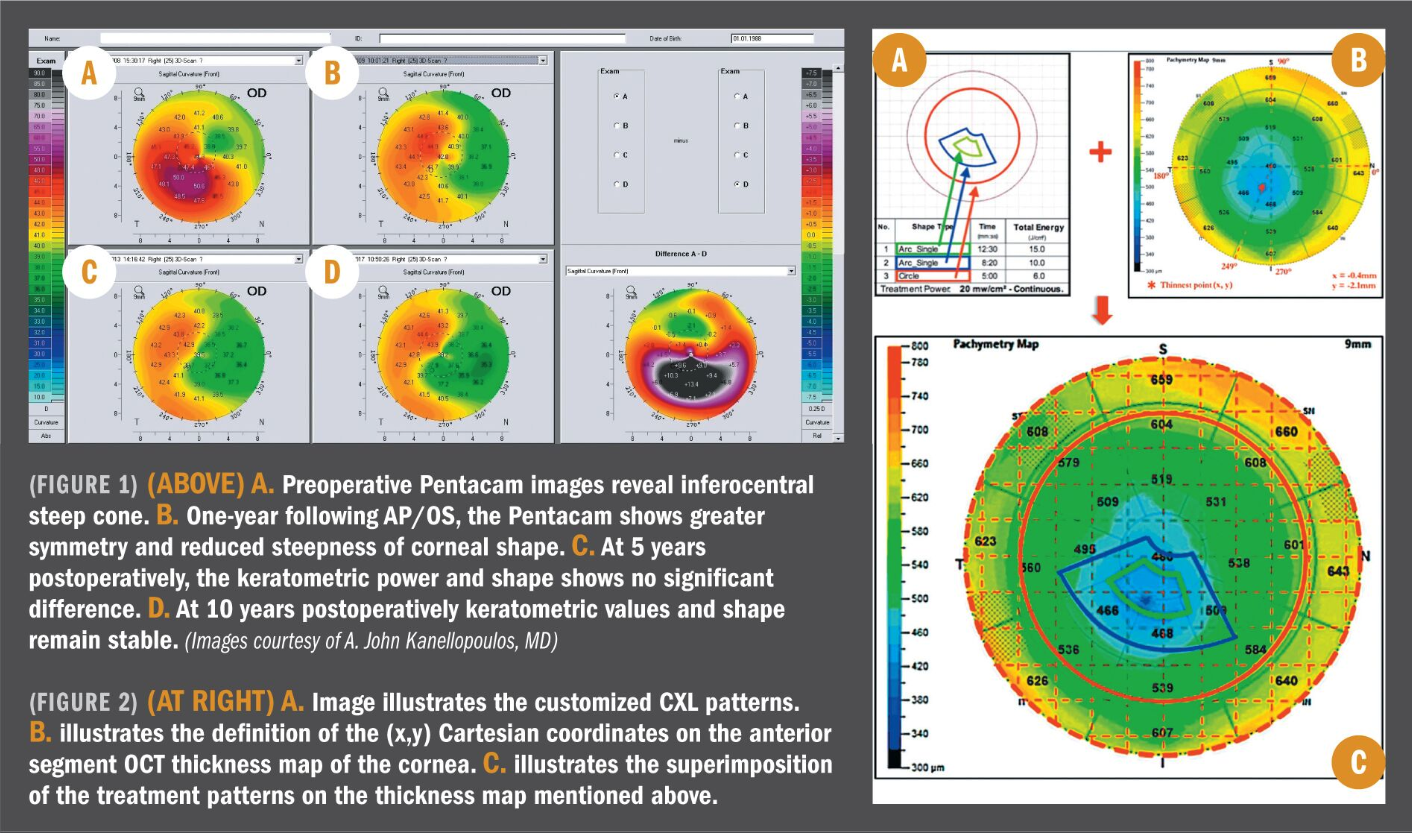






















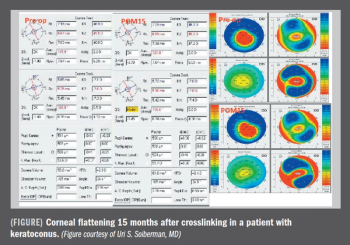
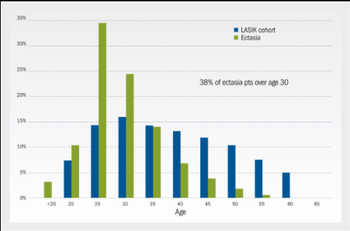
Stabilization, improvement in corneal curvature measurements seen in many treated cases
Stabilization, improvement in corneal curvature measurements seen in many treated cases
Combining LASIK, corneal inlays hits refractive ‘sweet spot’ for many patients
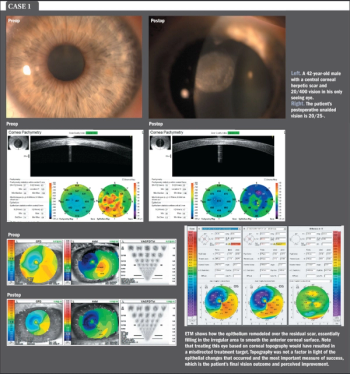
Quantitative measurement indicates corneal epithelium plays crucial role in outcomes
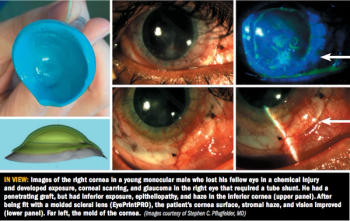
Management evolves from nasal neurostimulation, prosthetic replacement of ocular surface ecosystem
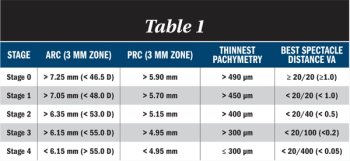
CXL has potential to alter disease course; progression display plays role in when to intervene

Ophthalmology Times’ Editorial Advisory Board members share their thoughts on what to watch in year ahead
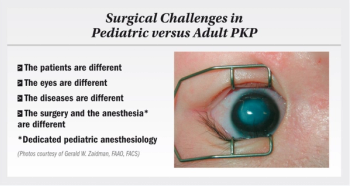
Evaluate patients’ social situations; educate parents about their participation

Erin D. Stahl, MD, discusses why it's important to diagnose and treat children with keratoconus at the earliest signs of development for successful outcomes during the AAO 2018 meeting in Chicago.
A study of patients undergoing corneal crosslinking (CXL) for keratoconus suggests gene expression and tear inflammatory profile may be used as biomarkers to predict CXL outcomes.

Shortcomings in ablative procedures mean that new developments in refractive surgery are welcome. Arthur Cummings, MD, FRCSEd, reviews two new technologies that will increase patient satisfaction.
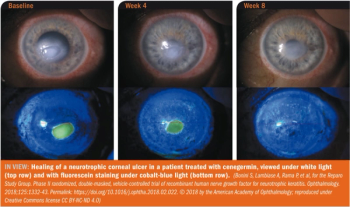
Topical cenegermin has been approved by the FDA for the treatment of moderate-to-severe neurotrophic keratitis (NK), ushering in a breakthrough of management.
The 2017 meeting of the American Academy of Ophthalmology will convene in New Orleans from Nov. 11 to 14. Go to www.aao.org/annual meeting for the latest updates
The most recent analyses of data from the ARMOR (Antibiotic Resistance Monitoring in Ocular micRoorganisms) Surveillance Program can guide clinicians choosing antibiotic therapy for initial empiric therapy and infection prophylaxis. The information also reinforces the importance of prudent antibiotic prescribing to limit the development of bacterial resistance to existing options, according to Penny Asbell, MD.
Ophthalmology Times asked readers for insights on antibiotics and eye infections from clinicians in the field - including experience with postoperative infections after eye surgery, if you use topical antibiotic prior to cataract surgery, how you choose antibiotics in a routine surgical prophylaxis, and more. The 118 U.S.-based ophthalmologists who responded were entered into a drawing to win a $200 gift card. Here are the survey results.
Patients with a contact lens lost in the eye are not a rare occurrence for ophthalmologists. However, 27 lenses at the same time may be another story! Another ophthalmologist shares his experience with a case involving 5 lenses within a patient's eye.

Cataract surgery in eyes undergoing simultaneous endothelial keratoplasty requires several modifications in techniques.
A phase II study investigating a novel topical cyclosporine product (CyclASol, Novaliq) formulated in a semifluorinated alkane (SFA) vehicle showed promising efficacy, safety, and tolerability. Planning is ongoing for the phase III trial of cyclosporine in the SFA technology.
Using the Descemet’s membrane endothelial keratoplasty (DMEK) procedure can produce better visual results and lower risk of rejection than using the previous methods (DLEK and DSAEK). The method has become easier to learn and use than in the past, and should be considered as the primary EK procedure for most routine cases of endothelial failure.
Advances in presbyopia, dry eye and allergy, and age-related macular degeneration filled this year’s meeting of the Association for Research in Vision and Ophthalmology.