

Conference Coverage
Latest News

Oct 27, 2026 | Feature
Think outside the cone: Applying the Gulani Keratoconus Classification

Retinal imaging as a window into atrial fibrillation
Oct 27, 2026

Women’s Health: Identifying dry eye in rheumatoid arthritis can make all the difference
Oct 26, 2026

Teprotumumab and TED: Sarah Cheng, MD, PhD, on orbital tissue changes
Oct 24, 2026

One day, three approvals: FDA expands options for ocular redness, thyroid eye disease, and presbyopia
Oct 23, 2026







Advertisement
Shorts

1:01
Remigromig in DME: Subgroups, duration and what comes next
15 hours ago
1:16
Tech-savvy and personal: What patients now expect from eye care
2 days ago

0:50
Why ABCA4-related retinal disease is so hard to treat
5 days ago

1:04
Subcutaneous option for TED
5 days ago

0:30
Why natural history studies deserve more attention
7 days ago

0:55
How a subcutaneous option could change thyroid eye disease care
8 days ago

1:23
Using videos and recorded visits for IOL counseling
8 days ago

0:58
How AI is changing the patient conversation in eye care
9 days ago

1:02
A complementary lens approach to refractive IOL selection
13 days ago
1:03
Approaching ocular pain like a detective
13 days ago
Digital Edition

Ophthalmology Times
The concerns of October 10, 1857, sound remarkably familiar today.

Ophthalmology Times
A solo surgeon explains how automation replaced his front desk, scheduling, and billing staff.

Ophthalmology Times
Sequencing IOL choice by eye can ease patient decision paralysis.

Ophthalmology Times
Concurrent exudative disease, early intervention, and a rare masquerader complicate the classic picture of geographic atrophy.

Ophthalmology Times
Epithelial basement membrane dystrophy can affect premium IOL outcomes.

Ophthalmology Times
A checklist could help keep patients with geographic atrophy on track.

Ophthalmology Times
Influence on effective lens position in cataract and lens-based surgery.

Ophthalmology Times Europe
New research covers a 3D OCT foundation model, an OCTA biomarker review and offline smartphone screening for three retinal diseases.

Ophthalmology Times Europe
A gamified program may speed the brain’s adjustment, new data suggest.

Ophthalmology Times Europe
João Pedro Marques, MD, PhD, on how systematic reanalysis moved a cohort's solved rate from 59.4% to 70.1% and what it means for gene therapy eligibility
Podcasts





Continuing Medical Education













Advertisement
All News
Advertisement

A vascular link: erectile dysfunction may signal glaucoma risk in men
Published: | Updated:
An association has been identified between primary open-angle glaucoma and erectile dysfunction.

Omur Ucakhan, MD, explains why artificial tears are not interchangeable and how dry eye phenotype should guide formulation choice.

The epidemiology, inflammatory pathophysiology, diagnosis, and treatment of diabetic macular edema are discussed during Inflammatory Eye Disease Week.

Himani Goyal, MD, reviews a patient case and discusses what a multispecialty group is seeing in practice.

CLARITY program data show significantly longer time to treatment failure and higher rates of steroid-free quiescence vs placebo.
Eleonora Lad, MD, PhD, Dimitra Skondra, MD, PhD, and John Kitchens, MD, point to structure and function, diet and the gut, and the future of reimbursement.

Spectacle lenses with highly aspherical lenslets are safe and effective for reducing myopia progression in US children.

CHMP backs Accord Healthcare’s Lucentis biosimilar Fovlussea for nAMD, DMO, RVO and CNV ahead of an EC decision.

Enrollment in the licaminlimab trial closed above target, with two-thirds of 176 patients carrying a TNFR1 variant associated with stronger treatment response. Topline data are expected around year-end 2026.

(FAQ) Inflammatory Eye Disease Week: What clinicians should know
Published: | Updated:
Prevent Blindness marks IED Week, October 19 to 25, as new therapies and pivotal trials reshape care for uveitis and thyroid eye disease.
Advertisement

Second phase 3 trial of Duravyu misses wet AMD noninferiority end point; EyePoint cuts 53% of staff to focus on DME.
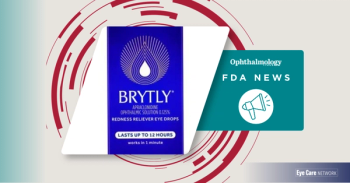
The nonprescription 0.125% apraclonidine drop is approved for adults and children 12 years and older, and Alcon says each dose whitens the eye for up to 12 hours.

Interim 48-month data show 86% of patients with glaucoma or ocular hypertension remain off topical drops after a single cataract procedure, although the drop-free rate has eased from earlier timepoints.

Duravyu gained 2.5 letters vs 6.1 with aflibercept at week 52/56, missing noninferiority in a second phase 3 wet AMD trial.

Jordi Monés, MD, PhD, explains why RP and Stargardt data support testing son-vec to restore vision in advanced GA.
Advertisement
Advertisement