

A multimodal OCT and ultra-widefield imaging model detected retinal inflammation in uveitis without fluorescein dye.
A multimodal OCT and ultra-widefield imaging model detected retinal inflammation in uveitis without fluorescein dye.
Nimesh A. Patel, MD, discusses compounded low-dose atropine and SYD-101 ahead of an October 30 FDA advisory committee meeting.

Christina Y. Weng, MD, MBA, FASRS, highlights findings showing statin use reduced PVR risk by 25% in a propensity-matched cohort of nearly 10,000 patients.

At Retina Society 2026, Emily Eton, MD, discusses a 10-center study finding similar exudate control in Coats disease and Coats-like disease in inherited retinal diseases, with more injections needed in the IRD group.

In the latest episode of The Retina TL;DR with Dr. Weng—part 1 of a special two-part series—host Christina Y. Weng, MD, MBA, FASRS, sits down with two of her former residents, now second-year surgical retina fellows, for candid advice on matching, transitioning, and thriving in fellowship.

At Retina Society 2026, Eileen Hwang, MD, PhD, discusses a meta-analysis finding a 1.78 times higher retinal detachment rate in COL2A1 vs COL11A1 Stickler syndrome and the case for prophylactic laser.

At Retina Society 2026, Nimesh Patel, MD, discusses how stage 2 ROP before 34 weeks raises the treatment rate and why he urges early referral and a risk-tailored approach to care.

Charles Wykoff, MD, PhD, reviews LUGANO safety and treatment burden data, including a 42% injection reduction with vorolanib insert vs aflibercept, despite a missed primary end point.
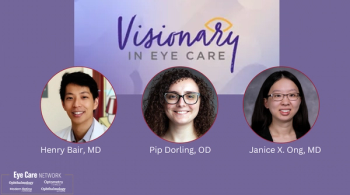
Three residents were honored for their leadership, education and research, and patient care contributions in ophthalmology, optometry, and retina.
Mark P. Breazzano, MD, FACS, shares findings from a TriNetX real-world database analysis on how HIV co-infection influences RPR titers in patients with ocular syphilis.
Chhablani reports revakinagene taroretcel-lwey slowed cavitation volume growth and preserved photoreceptor structure in MacTel type 2.

Dilsher S. Dhoot, MD, FASRS, breaks down the Phase 3 SOL-1 results on intravitreal axitinib hydrogel (OTX-TKI) and aflibercept on vision maintenance.

Christine Kay, MD, discusses 4-year REMAIN data showing durable visual acuity gains with MCO-010, a mutation-agnostic intravitreal optogenetic therapy for advanced retinitis pigmentosa.

Study found anti-VEGF therapy was linked to kidney function decline in patients with diabetic retinopathy or retinal vein occlusion.

At ESCRS 2026, Jascha Wendelstein, MD, noted standard ETDRS visual acuity testing misses functional differences between multifocal IOLs that reading-speed testing reveals.

Samantha Harding, MD, discusses how ultra-widefield imaging reduces dilation needs and improves diagnosis in paediatric eye care.

At WSPOS Subspecialty Day during the 44th Congress of the ESCRS in London, Mark Bullimore, PhD, MCOptom, shared early trial data suggesting the Stellest 2.0 lens may slow myopic progression twice as fast as the original.

Hove stresses surgeons who prescribe premium lenses or laser surgery to patients should be willing to have those same treatments themselves when needed.
Emami-Naeini previews Retina Society 2026's shift toward AI-derived, quantitative biomarkers in imaging and therapeutics.
Ana Miguel, MD, PhD, explains how artificial intelligence already outperforms experts in glaucoma screening, expands telemedicine access, and reshapes patient conversations.
Giuseppe Giannaccare, MD, PhD, FEBOphth, discusses new data on perioperative low-level light therapy for post-cataract dry eye at ESCRS 2026.

Anat Loewenstein, MD, previews EURETINA 2026 Vienna: the Innovation Spotlight, 17 sessions, symposia, and more.

Andrea Gibson, PhD, and Erin C. Henry, PhD, trace 20 years in retina drug development—and the pathway gap still facing young scientists.
Ashraf Ahmad, MD, explains what's driving rising dry eye rates and why eyelid evaluation is often overlooked.
At ESCRS 2026, Imane Tarib, MD discusses fostering inclusive ophthalmology workplaces and mentorship for early-career surgeons.

ESCRS 2026 data: patient selection and education may be key to aceclidine (VIZZ; LENZ Therapeutics) persistence.

Alessandro Arrigo, MD, previews an ESCRS 2026 presentation on a patent-pending method that adapts blue light autofluorescence confocal imaging to grade cataracts objectively. The approach yielded reproducible numeric indices that correlated with both expert LOCS III scores and measurable loss of retinal image quality.

Adam Muzychuk, MD, discusses how AI like the Kane formula is improving outcomes, and why he still urges caution over relying on it for clinical decisions.
Hove explains how his own cataract surgery has changed the way he counsels patients about glare, halos, and near vision.

Jai Parekh, MD, MA, FAAO, says AI is poised to transform eye care—from retinal and glaucoma imaging to cataract surgery—without disrupting it.