


If no comment from the FDA is received within 30 days, the company said it will initiate the BRM424 phase 2 study in the first half of 2023.
If no comment from the FDA is received within 30 days, the company said it will initiate the BRM424 phase 2 study in the first half of 2023.

According to data, 62% of patients treated with teprotumumab-trbw had a clinically meaningful improvement in proptosis at Week 24compared with 25% of patients receiving placebo.
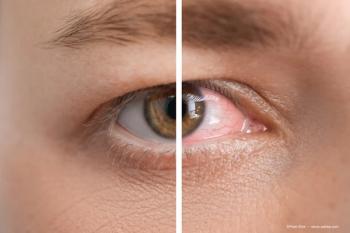
The ESSENCE-2 study showed a significantly greater reduction in the total corneal fluorescein staining (tCFS) score.

One way to advance the current understanding of GA is to study how disease progression varies among related individuals.

A team of researchers has uncovered a mechanism that causes blindness, could lead to targeted therapies.

According to National Eye Institute researchers, the variants generate malformed proteins that alter the stability of the membrane attack complex, which may drive a chronic inflammatory response in the retina.

A study shows Atropine 0.01% eye drops decreased myopia progression in children over the course of 1 year.

Ophthalmologists can learn the latest techniques to help patients like Tommy Pham from the New York Mets during the first annual IKA Keratoconus Symposium: Front to Back and Everything In Between, taking place April 22-23 in Scottsdale, Arizona.

Eye rubbing is a common practice, but one that can cause a number of problems.

Eyenuk Inc. founder and CEO Kaushal Solanki, PhD, went from working for the Defense Department to founding a company with a focus on artificial intelligence for ophthalmology. Find out what led him to make that jump.

By crossing into the retina, investigators have uncovered a new DHA supplement achieves what previous ones could not.

Intimate partner violence awareness in ophthalmologists can be heightened thanks to a recent study.

Alice Epitropoulos, MD, goes over some tips and methods to educate patients about OSD before performing any surgery.

SMSGOP and SMGOP are two models of artificial intelligence that can predict progression of Graves’ orbitopathy.

Retinal redetachment can occur frequently in eyes that underwent repair of rhegmatogenous retinal detachments (RRDs) after infectious endophthalmitis.

A successful career in ophthalmology may seem daunting to a young trainee, but Real World Ophthalmology is here to reveal the secrets.

Dirty equipment and sterilization issues are among the many violations found by the FDA.

Technology offers accessibility, scalability to countries where care is needed the most.

Cochair Elizabeth Yeu, MD, highlights what this program will mean for ophthalmologists, optometrists, and their patients.

Lisa M. Nijm, MD, MD, highlights what residents, fellows, and ophthalmologists who are early in their careers can expect at the virtual Real World Ophthalmology meeting on Saturday, April 15.

The company could also consider partnerships or licensing agreements for some drugs of its ophthalmology pipeline, including pegcetacoplan.
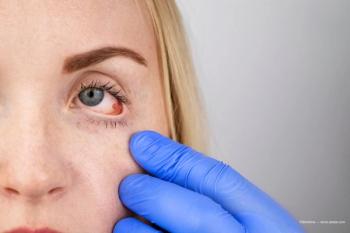
Despite the injection of intravitreal antibiotics at the end of corrective surgery, delayed-onset endophthalmitis can develop in patients who sustained open globe injuries.
Evolving technology is resulting in better outcomes for patients.

The first 2023 release of the Video Journal of Cataract, Refractive, & Glaucoma Surgery explores essential techniques for intraocular lens (IOL) removal, providing a diverse range of both routine and novel approaches within its hour-long presentation.
According to National Eye Institute researchers, the strategy may speed the delivery of therapeutic options relative to time it would take to develop gene therapies.

Alcohol abuse is associated with significant alterations to corneal endothelial density and morphology.

The month will serve to educate the public on a variety of women’s vision issues.

Brimonidine Tartrate Ophthalmic Solution is an alpha-adrenergic receptor agonist indicated for the reduction of elevated intraocular pressure in patients with open-angle glaucoma.

According to the company, clinically meaningful visual acuity gains were observed in several MCO-010 treated patients. The trial also demonstrated a favorable safety profile for MCO-010 with no serious or severe adverse events.

Disruption affected ophthalmology, altering physicians’ education, careers.