







Geographic Atrophy
Latest News
Advertisement
Video Series
Latest Videos










CME Content
























Advertisement
More News

The trial is evaluating OCU410 (AAV5-RORA) for the treatment of geographic atrophy (GA) secondary to dry age-related macular degeneration.

The Investigational New Drug (IND) application from Complement Therapeutics for CTx001 was previously approved by the FDA in October 2025

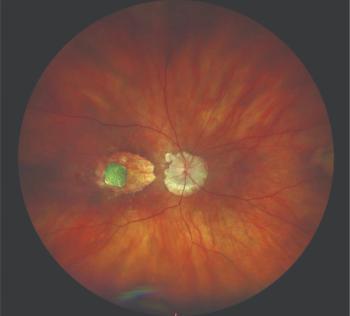
The novel system converts light into electrical signals to stimulate retinal cells.


This approach helps distinguish diseases associated with macular atrophy.

While primary endpoint analysis showed no statistical difference in the rate of change in GA area between AVD-104 versus monthly avacincaptad pegol, 12-month results showed approximately 31% reduction in GA lesion growth rate versus growth rates in sham and natural history rates.

Xelafaslatide is a small-molecule Fas inhibitor designed to protect key retinal cells, including photoreceptors, from cell death that occurs across multiple retinal diseases and conditions.

K8 is a member of a new class of inflammasome-inhibiting drugs called kamuvudines.

The DRAGON trial was a 24-month pivotal phase 3 trial evaluating Tinlarebant in adolescent STGD1 patients.

To help with education and awareness, Prevent Blindness is providing free, expert-approved educational resources on GA.

New five-year data reveal SYFOVRE significantly delays geographic atrophy progression, enhancing understanding of age-related macular degeneration treatment.

In the study, authors investigated the natural history of GA lesion incidence rates and analyzed potential risk factors for faster incidence of GA lesions.


New research highlights iron dysregulation's role in dry AMD, suggesting transferrin as a promising treatment to slow disease progression.

Xelafaslatide (formerly ONL1204) is a small-molecule Fas inhibitor designed to protect key retinal cells from cell death that occurs across multiple retinal diseases and conditions such as geographic atrophy.

Maximizing treatment based on GA location, lesion progression, and morphologic retinal changes.

The company can now initiate the Opti-GAIN (Optimized Geographic Atrophy INterventional) phase 1/2 clinical trial.


A recent study reveals that most UK patients with geographic atrophy find intravitreal complement inhibitors acceptable, emphasizing the importance of perceived visual benefits.

Character Biosciences enhances its leadership team and secures $93 million in Series B funding to advance treatments for degenerative eye diseases.

K8 was found to reduce geographic atrophy lesion area growth by more than 50% in its first human clinical trial of the drug.

Belite Bio completes its phase 3 trial for tinlarebant, a potential first treatment for Stargardt disease, with results expected in late 2025.

A new study explores the "drusen ooze" hypothesis, revealing how drusen can regress without atrophy in age-related macular degeneration.

Advertisement
Advertisement