


News
Advertisement

Viewing the solar eclipse without proper eye protection can pose hazards, and ophthalmologists can educate patients about the importance of using certified solar viewing glasses or other safe viewing methods.
Advertisement


New members bring a wealth of experience and expertise from various sectors within the ophthalmology, pharmaceutical, and healthcare fields, further strengthening the Ophthalmology Foundation's mission.

Study findings show every $1 invested in eye care sees $36 in return globally

An investigation is set to launch on SpaceX’s 30th Commercial Resupply Services mission to the International Space Station contracted by NASA to test the therapy in space.
Advertisement

The benefit concert will be held at 8 pm April 7 at The Sinclair in Cambridge, and will feature performances by ophthalmologists and industry partners.

DMEI provides more than 225,000 total patient visits per year from all 77 Oklahoma counties and the surrounding six-state region through its main location on the University of Oklahoma Health Sciences Center campus in Oklahoma City and four satellite locations.

According to the foundation, the grants were awarded to 18 investigators at prominent universities in the United States, Nigeria, and Hong Kong.

Neda Shamie, MD, previews a collaborative day packed with guest speakers, discussions on advanced patient care, and hands-on labs.
Advertisement

According to the company, its Virtual Eye Pro features improve visual field testing for practice and patients.

The trial evaluated nesvategrast (OTT166 5%) eye drops in patients with diabetic retinopathy.

The reverse stock split is “part of the Company’s plan to regain compliance with the minimum bid price requirement for continued listing on The Nasdaq Capital Market."
Alexander Movshovich, MD, PhD, a specialist in keratopigmentation, sat down to talk about the controversy surrounding the procedure after it went viral on social media.
Patients who underwent LASIK had undergone phacoemulsification 7 years earlier compared to a matched control group, according to the study authors.

Even small changes can have a large impact, saving time for physicians.

Study demonstrates that patients achieved long-term visual acuity gains following CureSight treatment.

OCU410 is a modifier gene therapy candidate being developed for geographic atrophy, an advanced stage of dry age related macular degeneration.
Scientists at the Doheny Eye Institute, in collaboration with UCLA chemists, demonstrate how a single gene mutation in an enzyme complex known to produce the energy required by cells causes a sudden, blinding disease.
The transient receptor potential melastatin 8 (TRPM8) are cold-sensitive thermoreceptors that play central role in tear film homeostasis
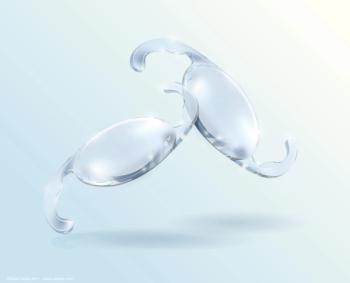
The Clareon platform will be available in India in 2 Presbyopia correcting IOL technologies: the Clareon PanOptix and Clareon Vivity.

The collaboration combines Clario's transformative technology with Cleveland Clinic's market-leading imaging expertise and AI-enabled analysis to help bring new therapies to patients, faster.

Ophthalmologists can educate their patients about the importance of using certified solar viewing glasses or other safe viewing methods.

Vermont is the latest state to consider legislation expanding the scope of practice for optometrists. Earlier this year, South Dakota became the 12th state to expand the scope of practice for optometrists.
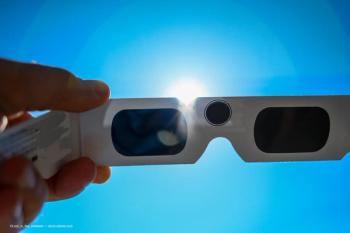
The organization aims to educate viewers of dangers and safety precautions ahead of the eclipses.

LL-BMT1 is a novel, preservative-free, weekly drug-eluting contact lens created by the company’s proprietary 3D printing technology.
Cyclosporine superior to vehicle, improves corneal staining in dry eye disease

Delivered in a water-free solution, Vevye’s new formulation offers a high concentration of cyclosporine that works rapidly, has no preservatives, and rarely causes irritation
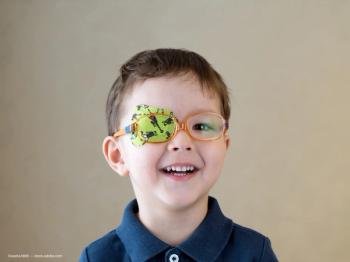
Investigators emphasized that the data does not indicate a causal relationship between eye disorder and systemic diseases.

In the study, published in Nature Biotechnology, researchers used their new system to correct disease-causing mutations in the eyes of two mouse models of genetic blindness, partially restoring their vision.
Advertisement
Advertisement