


The companies note that the partnership will propel Ray Therapeutics’ lead optogenetics gene therapy to Phase 1-2 clinical trials.
The companies note that the partnership will propel Ray Therapeutics’ lead optogenetics gene therapy to Phase 1-2 clinical trials.

The eye care nonprofit has continually harnessed the power of innovation to reach new heights in the fight against avoidable blindness.

The group is offering free sight-savings resources to employees and their employers.
This novel surgical system could dramatically improve outcomes for patients with glaucoma with its remarkable level of precision that is unachievable during standard glaucoma surgery.

According to the U.S. Department of Health and Human Services, nearly $19 billion in total aid has been distributed to providers since November.
Aleksandra Rachitskaya, MD, discusses how the treatment landscape for inherited retinal diseases has changed and her hope for the future.

The organization uses its Eyes on Capitol Hill program to educate lawmakers and their staff on a variety of vision health issues, including vision health inequities, the need for improved vision surveillance, the impact of community eye health programs, and disparities in access to affordable eyecare services.

Investigators conducted a study of the ocular findings in infants with congenital Zika virus syndrome that showed the findings were similar and occurred frequently among the affected infants.

Study investigators compared 2 novel lens designs using data obtained from 19 investigational sites in Australia, Canada, Spain, and the UK

The company will use proceeds from the Series A to assemble and develop a diversified pipeline of product candidates that combines scientifically compelling targets with innovative translational approaches.

While there is currently no cure for blindness, an artificial vision system has undergone its first successful implantation, bringing with it the potential to restore partial vision to people who have lost their sight.
Results from the study were presented by Russell Tait, PhD, CEO of PolyActiva, at the Glaucoma 360 New Horizons Forum in San Francisco, California
Tiffani Martin was diagnosed with type 1 juvenile diabetes when she was just 5 years old, and has battled myriad health issues as a result, including vision loss. Leading the charge for a multifactorial approach to combat diabetes, Kristen Nwanyanwu, MD, MBA, MHS, and her team have embraced the need for a multi-pronged program to address health disparities in diabetic retinopathy.
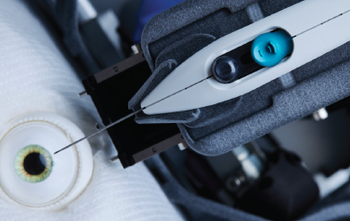
Utilizing new technology, surgeons can be 20 to 40 times more precise.

Proper measurement of the eye is key to predicting lens strength.

Researchers know that parts of the retina are considered as biomarkers for Alzheimer’s, but the team from Otago’s Dunedin Multidisciplinary Health and Development Research Unit in New Zealand have been investigating the retina’s potential to indicate cognitive change earlier in life.

During the Glaucoma 360 New Horizons Forum at the Grand Hyatt San Francisco at Union Square, several speakers discussed the latest advances in technology.

Oluwatosin U. Smith, MD, associate professor in the Department of Ophthalmology, University of Texas Southwestern, Dallas, speaks with Ophthalmology Times'® Sheryl Stevenson on the highlights of her presentation exploring remote monitoring of glaucoma and the future of virtual care on the whole.

Andrew G. Iwach, MD, co-founder and co-chair of Glaucoma 360, Glaucoma Center of San Francisco, speaks with Ophthalmology Times’® Sheryl Stevenson on his presentation regarding trends and challenges of glaucoma.

Shan C. Lin, MD, explains why ophthalmologists should be mindful of refractive considerations in cataract surgery for their patients with glaucoma.

Robert L. Stamper, MD, speaks with Ophthalmology Times®' David Hutton on intraocular pressure measurement, corneal elasticity, and why hysteresis is important for glaucoma management.

This year's Shaffer-Hetherington-Hoskins Lecture keynote speaker Joseph Caprioli, MD, focuses on the phenotypes of primary open-angle glaucoma with Ophthalmology Times®' David Hutton at Glaucoma 360.

Carel B. Hoyng, MD, noted that investigators have developed an RNA therapy to stop the progression of the disease, which ultimately leads to legal blindness.

Most patients (95%) with the PDS implanted did not need supplemental treatment before the refills, indicating the persistence and durability of the treatment.
After 2 years, the improvements in vision and anatomy were sustained with extended dosing out to every 16 weeks in a high percentage of patients.

During the Glaucoma 360 New Horizons Forum, the spotlight was cast upon sustained release injectables, including innovations that have been flourishing over the past year despite, or perhaps because of, a continuing worldwide pandemic.

Robert L. Stamper, MD, speak with Ophthalmology Times®' David Hutton to discuss his presentation at the Glaucoma 360 event in San Francisco, where he presented an update on OCT-Angiography and its role in detecting the density of the capillaries in the macula.
The introduction of new devices is possibly the single most influential factor currently driving the glaucoma market, said Kristen Harmon Ingenito, MBA, in her presentation during the New Horizons Forum at the 2022 Glaucoma 360.

During a presentation at the Bascom Palmer Eye Institute's Angiogenesis, Exudation, and Degeneration 2022 Virtual Edition conference, David S. Boyer, MD, explained that the drug, which is being considered to treat diabetic retinopathy, renal disease, and age-related macular degeneration, is intended to be an alternative therapy to monthly chronically administered intravitreal injections of anti-VEGF drugs.

Ranya Habash, MD, medical director of Technology Innovation, assistant professor of Clinical Ophthalmology at Bascom Palmer Eye Institute, University of Miami in Miami, Florida, offers a preview of her New Horizons keynote speech on "The future of eye care: science fiction to science fact."