
Arshad M. Khanani, MD, MA, discusses phase 3 SOL-1 data showing axitinib sustained vision in wet AMD for 9-12 months after 1 dose, outperforming aflibercept 2 mg.
Arshad M. Khanani, MD, MA, discusses phase 3 SOL-1 data showing axitinib sustained vision in wet AMD for 9-12 months after 1 dose, outperforming aflibercept 2 mg.
Applying phase 3 LUGANO/LUCIA criteria to the phase 2 DAVIO 2 population showed stable vision and anatomy with the vorolanib insert EYP-1901 in wet AMD, Aleksandra Rachitskaya, MD, FASRS, reported at ASRS 2026.
OLN324 outperformed faricimab on anatomic outcomes as early as week 1 in the JADE trial, with no cases of intraocular inflammation across both dose groups.
Initiating aflibercept 8 mg or faricimab as a first-line therapy was associated with longer treatment intervals and superior anatomic outcomes in a real-world analysis of more than 12,000 eyes.
Cataract surgery becomes refractive: learn how IOL choices and preop counseling across distance, intermediate and near turn 20/20 into 20/happy.
Dry eye cases rise with heavy screen use and younger patients; learn modern workups spotlighting MGD, etiology-driven treatments, and collaborative care reshaping outcomes.
Bedside OCT in preterm infants links retinal thickness to motor, cognition, and autism risk at age 2, hinting at earlier brain screening.
Andy Chang and Mikhail Boukhny of BVI Medical discuss the company's new Experience Hub in Sant Cugat, Spain, a hands-on training facility built to gather surgeon feedback ahead of the Virtuoso platform's European launch.
Optometrist–ophthalmologist co-management targets dry eye early, improves cataract and refractive surgery satisfaction, and uses advanced diagnostics and treatments for healthier ocular surfaces.
Ectoine eye drops boost tear stability and ease redness and tired eyes, along with burning, foreign body and dryness sensations, offering fast, irritation-free relief for patients with dry eye disease.
Piotr Woźniak, MD, PhD, shares real-world evidence on Artelac Complete in dry eye disease from EuDEC 2026 in Milan, Italy, including improvements in tear break-up time and Schirmer scores, perioperative and contact lens use patterns, and high eye care practitioner satisfaction.

Meeting founder and co-chair Arshad M. Khanani, MD, MA, FASRS, shares what attendees can expect during this year's program, opening the evening of June 12 and running through June 13 in Las Vegas, Nevada.
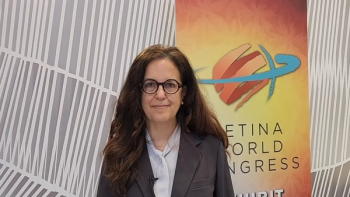
Sharon Fekrat, MD, FACS, FASRS, reviews the science behind dopamine signaling in the retina and its potential role in the progression of age-related macular degeneration.
Dimitra Skondra, MD, PhD, FASRS, shares her perspective on the evolving treatment landscape for dry age-related macular degeneration and the key questions facing the field.
Carl D. Regillo, MD, FACS, reviews long-term efficacy and safety findings from the Port Delivery System clinical trial program.
Michael Singer, MD, discusses the role of steroids, biomarkers, and second-generation therapies in diabetic macular edema management.
In this interview from the 2026 Retina World Congress, Katherine Talcott, MD underscores that retinal vein occlusions (RVOs) should prompt retina specialists to look beyond the eye and ensure patients are connected to primary care and cardiology. She highlights the importance of systemic risk factor management and interdisciplinary coordination as essential components of comprehensive RVO care.
Ashkan Abbey, MD, reviews findings from the DAVIO2 and VERONA clinical trials for the bioerodible intravitreal insert.
Ultra-widefield pediatric retinal scans plus adaptable AI reveal hidden eye issues during routine visits, enabling comfortable, scalable screening and earlier specialist referrals.
Patricio G. Schlottmann, MD, examines why injection frequency drives treatment failure in wet AMD and the particular challenges facing patients in Latin America.

Caveolin‑1 is a membrane-associated protein expressed in many cell types that plays a key role in modulating inflammatory signaling.
Posture, operating room setup, and small workflow adjustments can reduce cumulative neck and back strain over time.
Jay Chhablani, MD, on multimodal imaging, OCT biomarkers, and the importance of early diagnosis as treatment options emerge
Jay Chhablani, MD, a retina specialist from UPMC Vision Institute and director of the Choroidal Analysis and Research Lab at the University of Pittsburgh, discussed recent advancements in choroidal imaging.
Uveitis expert Nisha Acharya, recipient of ARVO’s Mildred Weisenfeld Award, discusses how clinical trials and big data are reshaping treatment, vaccination, and vision outcomes.
Paul Nderitu discusses Global RETFound, a diverse, worldwide retinal AI model that outperforms existing tools and sets a new standard for equitable, open-access medical AI.
NYU researchers discuss using CellChek C widefield specular microscopy to visualize and quantify corneal nerves in dry eye disease, revealing reduced nerve fiber length and inferior whorl changes and offering a practical alternative to in vivo confocal imaging.
At ARVO Michael Siatkowski, MD, and Jody Summers, PhD, stopped to discuss the rising rates of myopia in children and if anti-inflammatory drugs could play a role in slowing progression.
Single-shot optogenetic injection restores light sensitivity in advanced retinitis pigmentosa, delivering sustained vision gains for years with strong safety, expanding hope beyond gene-specific therapy.
Aaron Lee, MD, and Cecilia Lee, MD, co-recipients of this year's Cogan Award at ARVO, reflect on what the award lecture means to them and their careers.