


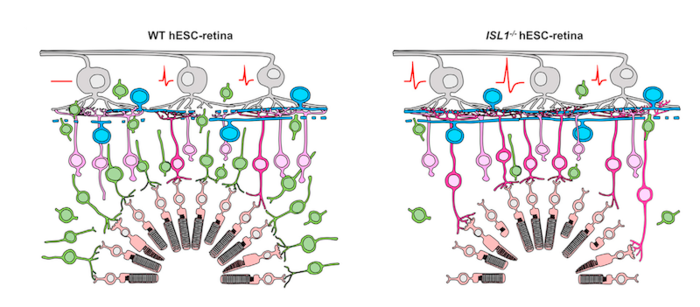




























According to the company, 4D-150 is a dual-transgene, intravitreal gene therapy designed to inhibit four distinct angiogenic factors to prevent angiogenesis and reduce vascular permeability for the treatment of wet AMD.
According to the company, 4D-150 is a dual-transgene, intravitreal gene therapy designed to inhibit four distinct angiogenic factors to prevent angiogenesis and reduce vascular permeability for the treatment of wet AMD.
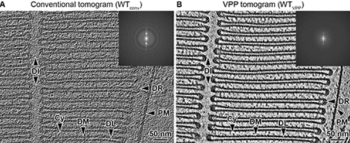
Team at University of California, Irvine provides an understanding of the mechanisms underlying the pathologies of certain gene mutations.

The novel gene therapy product candidate is being developed as a potential single intravitreal administration for blue cone monochromacy by delivering a functional copy of the OPN1LW gene.

The grant will provide Steven DeVries, MD, PhD, the opportunity to travel to Kyoto, Japan and learn from scientists at Ritsumeikan University about the process of growing 3D retinal organoids from stem cells, a technique first developed in Japan.

Researchers have found that study participants with healthy eyes and no history of AMD had thinner retinas if they carried the genes that put them at risk.

In light of another unprecedented year filled with technological advancements and pivots as a result of the pandemic, Joshua Mali, MD, offers his top 5 predictions in ophthalmology for 2022.

A team of researchers with the West Virginia School of Medicine are studying how a benign virus can make new treatments for eye diseases possible.

A team of researchers from Thomas Jefferson University have found that immune cells could be doing much more than first thought in protecting our eyes.
The cell-by-cell atlas will help in the study of eye disorders and development of cell therapy to replace damaged eye tissue.

Several research giants will team up to beat rare diseases that are currently using gene therapy.

According to investigators, the virtual reality option could overcome hurdles associated with reliance on a physical course.

Successful treatment options can offer hope for patients with inherited disease.
Investigators believe the therapy could prove to be an option for the treatment of other retinopathies.

PRS can modify disease outcomes due to other genes, such as MYOC.

Investigators from the University of Maryland found that uncovering the mechanism of vision loss in Usher syndrome yields additional drug targets for eventual development of better therapies.

Investigators find that mutations could lead to early treatment intervention.

Improvements are seen after gene therapy for Leber congenital amaurosis.

Investigators have found that the early and late stages of uveal melanoma differ markedly.

According to investigators, aqueous humor analysis differentiated the tumors in patients.
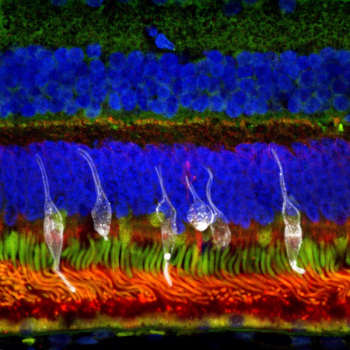
In a study, investigators demonstrated the safety and therapeutic potential of clinically compliant iPSC-derived photoreceptor precursors as a cell replacement source for future clinical trials.
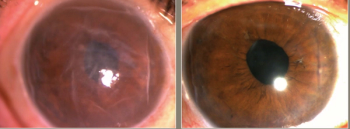
Results from Aurion Biotech's IOTA trial reveals that a corneal endothelial cell therapy showed improvements in visual acuity and central corneal thickness, according to a team of Japanese investigators.

Richard B. Rosen, MD, DSc(Hon), reports on the capabilities of using clinical OCT for imaging and measuring macular surface macrophage cells during the 2021 ASRS annual meeting.

According to 4D Molecular Therapeutics, it has received FDA Clearance of an IND Application for 4D-150, a dual-transgene intravitreal gene therapy for patients with wet AMD.

A team of investigators have found that a molecular mechanism drives the progression of uveal melanoma, an often lethal eye cancer in adults.
AbbVie and REGENXBIO announced a strategic partnership to develop and commercialize RGX-314, an investigational gene therapy for wet age-related macular degeneration, diabetic retinopathy and other chronic retinal diseases.