

Clinicians discuss how the treatment compares with epi-off cross-linking, what may shape adoption, and how patient outcomes could improve.

Sheryl brings a wealth of editorial experience to MJH Life Sciences’ Eye Care Network, having engaged with the readers and the greater ophthalmic community of Ophthalmology Times for more than 20 years. As Group Editorial Director, Sheryl’s purview extends across the print and digital network of Ophthalmology Times, Ophthalmology Times Europe, Modern Retina and Optometry Times. Prior to ophthalmology, Sheryl previously covered the fields of audiology and confectionery science/technology/manufacturing.
Sheryl is also passionate about the mission, vision and values of Ophthalmic World Leaders (OWL) and recently completed her term on its Board of Directors. She continues to volunteer as Editor-in-Chief of the organization’s EMPOWER Magazine. In 2013, she was honored with the group’s inaugural Rising Star Award.
In addition, she has served as a judge for Crain's Cleveland Business Health Care Heroes Awards program as well as the Jesse H. Neal National Business Journalism Awards.
Clinicians discuss how the treatment compares with epi-off cross-linking, what may shape adoption, and how patient outcomes could improve.
Marguerite B. McDonald, MD, FACS, reflects on a first-year residency case that taught her the importance of trusting her instincts and advocating for patient safety.

Dr. James Chelnis explores innovative energy-based technologies in aesthetic facial surgery, emphasizing safety, personalized treatments, and future advancements in patient care.

Ophthalmologists discuss topography-guided techniques, long-term corneal health, and emerging technologies set to transform refractive surgery.
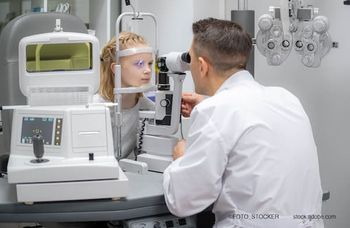
Specialists discuss diagnostic technologies, treatment strategies, and research that are improving outcomes for young patients

Deborah A. Ferrington, PhD, highlights how breakthroughs in imaging, AI, and stem cell research are reshaping ophthalmology.

Deborah Ristvedt, DO, recalls a retinal detachment repair that took an unexpected turn, teaching lasting lessons in patient awareness and surgical presence.

Emerging devices, wearable technology, and home-monitoring tools are reshaping how clinicians diagnose, treat, and manage patients.
Peter J. McDonnell, MD, reflects on his early experience managing bullous keratopathy with penetrating keratoplasty and how advances like DMEK have transformed outcomes across corneal, refractive, and cataract surgery.

Surgeons weigh in on emerging surgical technologies, premium lens trends, and strategies to optimize patient satisfaction and safety.

From MIGS integration to remote monitoring and next-generation therapeutics, glaucoma specialists explore how new approaches are redefining patient outcomes.
Oluwatosin U. Smith, MD, reflects on early experiences caring for pediatric patients with complex glaucoma and how evolving tools and advancing science have reshaped treatment options over the decades.

The awards recognize outstanding contributions in 3 categories—Rising Star, Catalyst, and Visionary Leader—honoring individuals driving innovation, inclusion, and impact across ophthalmology.
As a US clinical investigator, Wiley shares his insights on the FineVision HP trifocal lens, highlighting patient visual outcomes, satisfaction, and its impact on cataract surgery practice.

David Eichenbaum, MD, FASRS, recalls an early-career case managing bilateral diabetic macular edema with frequent intravitreal triamcinolone injections—leading to severe steroid-induced glaucoma and valve implants.
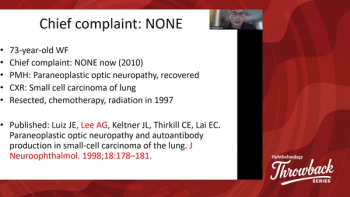
Andrew G. Lee, MD, revisits a 1997 case in which recognizing paraneoplastic optic neuropathy led to the diagnosis—and life-saving treatment—of small cell lung carcinoma.
Neda Shamie, MD, recounts a humbling experience performing cataract surgery in Honduras using older-generation phaco machines, revealing how technology elevates both skill and patient care.

Chiu discusses factors affecting adoption of the FDA-approved epi-on therapy, from clinic setup to insurance coverage, while highlighting its safety and efficacy.

The decision follows results from the Phase 3 STAR trial, among the largest global studies of low-dose atropine in pediatric myopia.

HELIOS Phase 1 showed consistent reductions in retinal fluid with OTX-TKI, paving the way for pivotal HELIOS-2 and HELIOS-3 trials.

Inder Paul Singh, MD, shares a formative experience in which a patient’s vision loss—and their unexpected gesture of comfort—shaped his approach to high-risk glaucoma care.

Optogenetics shows promise in improving mobility and object recognition for patients with retinitis pigmentosa and Stargardt disease.
SriniVas R. Sadda, MD, FARVO, recalls a residency case that highlights the transformative impact of OCT and OCT angiography.

Rajpal shares his perspectives on the newly FDA-approved treatment, clinical benefits, and its potential impact on keratoconus management.
Sunir J. Garg, MD, explores the nuances of endophthalmitis, distinguishing between infectious and non-infectious responses for effective patient management.

Research reveals significant vision improvements and extended treatment intervals with aflibercept 8 mg for age-related macular degeneration and diabetic edema patients.

Phase 2 STARLIGHT study participants, particularly those with the macular phenotype, experienced meaningful gains in visual acuity at 48 weeks.

The incision-free therapeutic for keratoconus is expected to be commercially available in early 2026, according to the company.

Bedrood describes improved visualization of the ciliary body, efficient setup, and favorable postoperative outcomes.