


Commentary|Videos|April 17, 2026
ASCRS 2026: Gabriel Quesada, MD, on robotic femtosecond laser for LASIK flap creation
Author(s)Gabriel Quesada, MD, Sheryl Stevenson
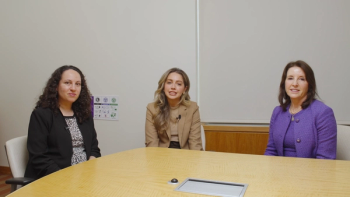
Quesada discusses a robotic femtosecond laser platform for LASIK, focusing on flap accuracy, stromal bed precision, and the role of integrated OCT imaging.
Advertisement
Advances in femtosecond laser technology continue to refine flap creation in
Precision and flap customization
“This platform works with a robotic arm,” Quesada said, noting that “the precision and exact flap measurement that you can create is incredible.” In the study, flap thicknesses were created across a range of targets, including “one hundred and fifty microns… one hundred and thirty microns,” with the capability to extend to thinner flaps “from one hundred and ten microns or even ninety microns.”
OCT imaging and intraoperative measurement
Flap accuracy and stromal bed measurements were assessed using anterior segment OCT. Quesada reported that “the precision of the measurement that we have from the flaps and the stromal bed with OCT… was incredible,” adding that measurements were “more exact than the ones that are already established in the published data.”
The integrated imaging system was highlighted as a key differentiator. “I think that the most important part is the viewing of the cornea,” he said, emphasizing that the OCT system “is incredibly exact when you're measuring the cornea.” This real-time feedback was associated with consistent flap quality, with flaps described as “excellent flaps with very clear results.”
Clinical outcomes and flap quality
Clinical outcomes were reported as comparable to established LASIK benchmarks. “The visual acuity of all the subjects… was among the results that we have with LASIK surgery,” Quesada said. Supporting data from the study demonstrated predictable flap thickness with low variability and favorable early visual outcomes, without significant intraoperative complications reported in the initial series.
From cataract platform to corneal application
The platform’s development originated in cataract applications. “We began working with the LENSAR… to help them create the density measurement for the cataract surgeries,” he explained, with subsequent adaptation of the technology for corneal use. “We said, ‘Why don't we use it also in the cornea?’ And that's how the flaps began.”
From a surgical perspective, the combination of robotic control and imaging may contribute to procedural consistency. Quesada noted that “the images that we can get… make the surgery safer, even in the cornea or in the cataract.”
Overall, the findings suggest that enhanced imaging and robotic-assisted delivery may support precise flap creation and reproducible outcomes in LASIK, with ongoing evaluation needed to further characterize performance across broader patient populations.
Advertisement
Related Content
Advertisement



Latest CME














Advertisement
Advertisement
Trending on Ophthalmology Times - Clinical Insights for Eye Specialists
1
FDA guidance to help accelerate cell and gene therapies
2
Closing the gap: John Berdahl, MD, on the global cataract burden and the emerging dementia connection
3
Treatment Goals in Retinal Vascular Diseases
4
Durability and Unmet Needs in Retinal Vascular Diseases
5