







Geographic Atrophy
Latest News
Advertisement
Latest Videos








CME Content
























Advertisement
More News


Kriya is developing gene therapies targeting chronic diseases such as geographic atrophy, trigeminal neuralgia, and type 1 diabetes.

Fovea-sparing, multifocal, and bilateral lesions exhibited the fastest growth rates.

Omer Trivizki discusses promising results of VOY-101, a gene therapy for geographic atrophy, highlighting safety and next steps in ongoing research.



Dr. Nimesh A. Patel reveals key findings on pegcetacoplan and anti-VEGF treatments for geographic atrophy and neovascular AMD at ASRS 2025.

Jay Chhablani, MD, presented the phase 1/2 clinical trial data for OCU410, at the 2025 annual meeting of the American Society of Retina Specialists.


Vonaprument has received fast track designation from the US Food and Drug Administration.

SAR446597 is a one-time intravitreal gene therapy treatment for the treatment of geographic atrophy

Preliminary results of PST-611-CT1 are anticipated early 2026, subject to patient recruitment.

New findings reveal RG6501 cell therapy shows promising long-term visual improvements for geographic atrophy patients

A look at current therapies, clinical trial results, patient education, and emerging options for managing this progressive retinal disease.

Assistive devices empower patients with central vision loss to regain independence, enhancing daily activities and reducing reliance on low vision centers.

The trial treated 9 patients in 3 sequential, ascending dose-level (DL) cohorts.

A study reveals attrition rates in patients with geographic atrophy on complement inhibitor therapies, highlighting the need for improved treatment adherence strategies.

Discover how ellipsoid zone integrity predicts geographic atrophy growth rates in recent clinical trials, enhancing future treatment strategies.

Vakharia insights from the ARCHER trial on geographic atrophy treatment for dry AMD, highlighting promising results and future directions in ophthalmology.

New analysis reveals the ellipsoidal zone's role in predicting geographic atrophy progression, enabling timely interventions to protect photoreceptors.
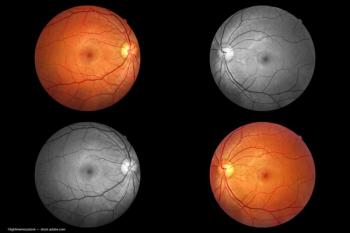
New research links diffuse-trickling patterns in fundus autofluorescence to increased ellipsoidal zone loss, highlighting potential biomarkers for rapid geographic atrophy progression.

The designation is based off previously reported phase 3 data from the ongoing DRAGON trial.

At ARVO 2025, in Salt Lake City, Utah, Roger Goldberg, MD, MBA, talked about his presentation on the effect of AREDS vitamins in geographic atrophy.


A recent analysis reveals a strong link between photoreceptor health and visual function in geographic atrophy, emphasizing the importance of EZ integrity.
Advertisement
Advertisement